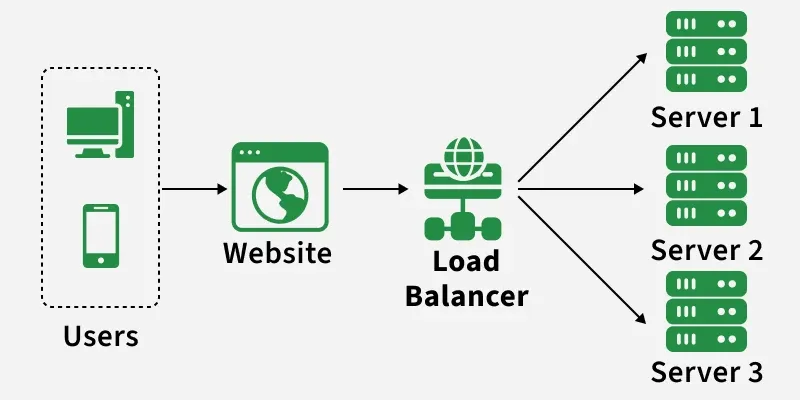
A load balancer is a critical component in modern distributed systems, responsible for distributing incoming network traffic across multiple servers to ensure reliability, performance, and scalability.
Why Use a Load Balancer?
High Availability: Prevents a single server from becoming a point of failure.
Scalability: Allows you to add or remove servers as demand changes.
Performance: Distributes requests to avoid overloading any single server.
Security: Can hide internal server details and provide SSL termination.
Types of Load Balancers
1. Layer 4 (Transport Layer)
Operates at the TCP/UDP level.
Routes traffic based on IP address and port.
Examples: AWS Network Load Balancer, HAProxy (TCP mode).
2. Layer 7 (Application Layer)
Operates at the HTTP/HTTPS level.
Can make routing decisions based on URL, headers, cookies, etc.
Examples: NGINX, AWS Application Load Balancer, Traefik.
Load Balancing Algorithms
Round Robin: Distributes requests sequentially across servers.
Least Connections: Sends traffic to the server with the fewest active connections.
IP Hash: Routes requests based on client IP, useful for session persistence.
Weighted Round Robin: Assigns more traffic to more powerful servers.
Health Checks
Load balancers regularly check the health of backend servers. If a server fails, it is temporarily removed from the pool until it recovers.
Drawbacks and Challenges
Single Point of Failure: If the load balancer itself fails, the whole system can go down. Use multiple load balancers and DNS failover for redundancy.
Complexity: Adds configuration and operational overhead.
Latency: Introduces an extra network hop, which can add slight delays.
Cost: Managed load balancers (cloud) can be expensive at scale.
Implementation Example: NGINX as a Load Balancer
http {
  upstream backend {
    server backend1.example.com;
    server backend2.example.com;
  }
  server {
    listen 80;
    location / {
      proxy_pass http://backend;
    }
  }
}
Load Balancer vs Reverse Proxy
Load Balancer: Distributes traffic across multiple backend servers, often for scaling and redundancy.
Reverse Proxy: Forwards client requests to one or more backend servers, often for caching, SSL termination, or security. Can also act as a load balancer.
Overlap: Many tools (e.g., NGINX, HAProxy) can serve as both.
Key Differences
Purpose: Load balancer focuses on distribution; reverse proxy focuses on abstraction and security.
Session Persistence: Load balancers may need sticky sessions; reverse proxies often do not.
Advanced Topics
Global Load Balancing
Use DNS-based or Anycast routing to distribute traffic across regions or data centers.
SSL Termination
Offload SSL decryption at the load balancer to reduce backend server load.
Autoscaling
Integrate with orchestration tools (Kubernetes, AWS ASG) to automatically add/remove backend servers.
Best Practices
Always deploy at least two load balancers for redundancy.
Monitor health and performance metrics.
Use configuration management for reproducible setups.
Regularly test failover and recovery scenarios.
Real-World Example: E-commerce Platform
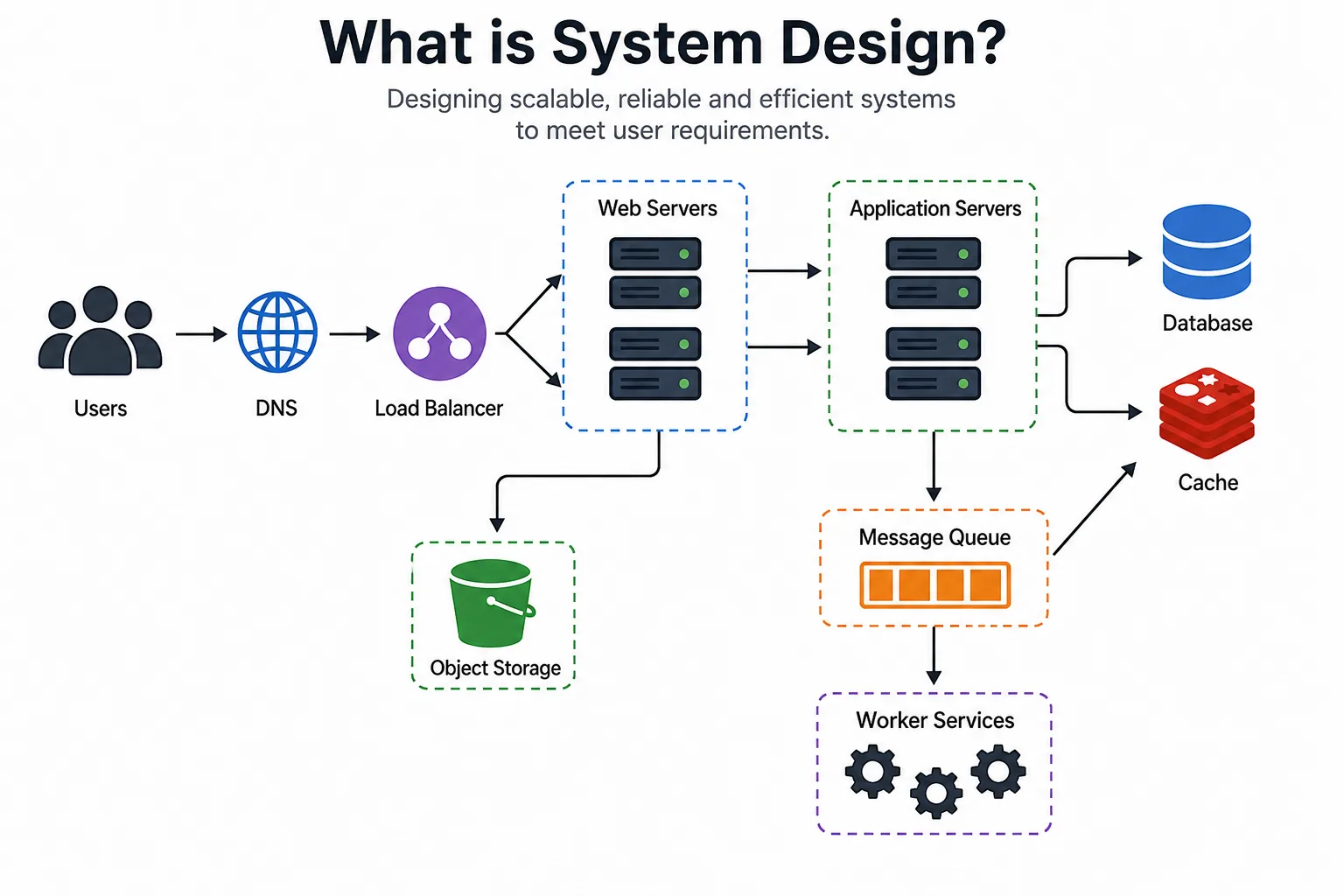
User Traffic: Hits DNS, routed to the nearest load balancer.
Load Balancer: Distributes requests to web servers.
Web Servers: Communicate with application and database layers.
Failover: If a web server or load balancer fails, traffic is rerouted automatically.
Conclusion
Load balancers are essential for building robust, scalable, and high-performance systems. Understanding their types, algorithms, and best practices is key to designing resilient architectures.
🧠 Remember: Always avoid single points of failure and plan for growth and failure from day one.